
Drill Pipe Capacity and Displacement Chart
Drill pipe is an unfilled piping with thick wall, used in a drilling rig to transfer fluid to the drill bit, passing through the wellbore. During the production process, it is ensured that the capacity of the drill pipe is suitable for the rotation and lifting of the bottom hole assembly (BHA) where it can experience severe external and internal pressure, vibration, bending, and distortion. On every end of a section of pipe, known as the tool joint, the drill pipe is threaded. Standard specifications are being followed during the production, testing, and evaluation of the drill pipe capacity and displacement.
Drill Pipe Importance and Types
Drill pipeis the core for petroleum production; the absence of such will mean a great ordeal for the oil and gas industry. Drills made of drill pipe are the principal machineries needed for petroleum production. Hence, the drill pipe plays a very significant role in the drilling industry, being the main components utilized to pump drill fluid to the drill bit. This hardened, unfilled steel pipe, strengthened against accidents, is made to hold out underground pressures.
Standard Drill Pipe and the majority of the drill string is composed of standard drill pipe that comprises of lengthy cylindrical sections of pipe. They are commonly manufactured in lengths of 31 feet but may also range from 18 to 45 feet in length.
Heavy Weight Drill Pipe (HWDP) is a cylindrical pipe that either plays as a transitional part in the drill string or adds weight to it. The HWDP can be utilized to provide additional weight to pull the drill string. In some ways, it is situated between the standard drill pipe and drill collar. It acts as a transitional part, where it helps lessen fatigue failure.
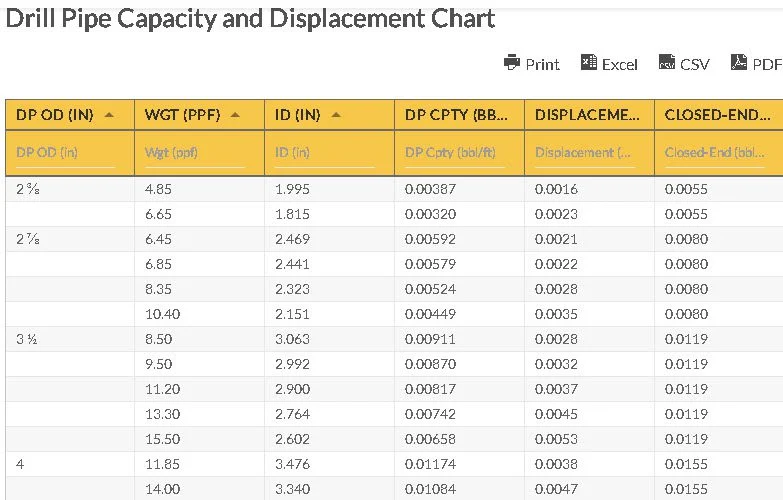
Drill Pipe Capacity and Displacement Chart
Drill pipe commonly undergoes inspection following production and regularly, for possible wear and tear secondary to the working conditions in which they are utilized.
| wdt_ID | DP OD (in) | Wgt (ppf) | ID (in) | DP Cpty (bbl/ft) | Disp. (bbl/ft) | Clsd-End (bbl/ft) |
|---|---|---|---|---|---|---|
| 1 | 2 ⅜ | 4.85 | 1.995 | 0.00387 | 0.0016 | 0.0055 |
| 2 | 6.65 | 1.815 | 0.00320 | 0.0023 | 0.0055 | |
| 3 | 2 ⅞ | 6.45 | 2.469 | 0.00592 | 0.0021 | 0.0080 |
| 4 | 6.85 | 2.441 | 0.00579 | 0.0022 | 0.0080 | |
| 5 | 8.35 | 2.323 | 0.00524 | 0.0028 | 0.0080 | |
| 6 | 10.40 | 2.151 | 0.00449 | 0.0035 | 0.0080 | |
| 7 | 3 ½ | 8.50 | 3.063 | 0.00911 | 0.0028 | 0.0119 |
| 8 | 9.50 | 2.992 | 0.00870 | 0.0032 | 0.0119 | |
| 9 | 11.20 | 2.900 | 0.00817 | 0.0037 | 0.0119 | |
| 10 | 13.30 | 2.764 | 0.00742 | 0.0045 | 0.0119 | |
| 11 | 15.50 | 2.602 | 0.00658 | 0.0053 | 0.0119 | |
| 12 | 4 | 11.85 | 3.476 | 0.01174 | 0.0038 | 0.0155 |
| 13 | 14.00 | 3.340 | 0.01084 | 0.0047 | 0.0155 | |
| 14 | 15.70 | 3.240 | 0.01020 | 0.0053 | 0.0155 | |
| 15 | 4 ½ | 12.75 | 4.000 | 0.01554 | 0.0041 | 0.0197 |
| 16 | 13.75 | 3.958 | 0.01522 | 0.0045 | 0.0197 | |
| 17 | 16.60 | 3.826 | 0.01422 | 0.0055 | 0.0197 | |
| 18 | 20.00 | 3.640 | 0.01287 | 0.0068 | 0.0197 | |
| 19 | 5 | 16.25 | 4.408 | 0.01888 | 0.0054 | 0.0243 |
| 20 | 19.50 | 4.276 | 0.01776 | 0.0065 | 0.0243 | |
| 21 | 20.50 | 4.214 | 0.01725 | 0.0070 | 0.0243 | |
| 22 | 5 ½ | 21.90 | 4.778 | 0.02218 | 0.0072 | 0.0294 |
| 23 | 24.70 | 4.670 | 0.02119 | 0.0082 | 0.0294 | |
| 24 | 5 ⅞ | 23.40 | 5.153 | 0.02579 | 0.0077 | 0.0335 |
| 25 | 26.30 | 5.045 | 0.02472 | 0.0088 | 0.0335 | |
| 26 | 28.67 | 4.875 | 0.02309 | 0.0104 | 0.0335 | |
| 27 | 6 ⅝ | 22.20 | 6.065 | 0.03573 | 0.0069 | 0.0426 |
| 28 | 25.20 | 5.965 | 0.03456 | 0.0081 | 0.0426 | |
| 29 | 31.90 | 5.761 | 0.03224 | 0.0104 | 0.0426 | |
| 30 | 7 ⅝ | 29.25 | 6.969 | 0.04718 | 0.0093 | 0.0565 |
| wdt_ID | DP OD (in) | Wgt (ppf) | ID (in) | DP Cpty (bbl/ft) | Disp. (bbl/ft) | Clsd-End (bbl/ft) |
|---|---|---|---|---|---|---|
| 1 | 2 ⅜ | 4.85 | 1.995 | 0.00387 | 0.0016 | 0.0055 |
| 2 | 6.65 | 1.815 | 0.00320 | 0.0023 | 0.0055 | |
| 3 | 2 ⅞ | 6.45 | 2.469 | 0.00592 | 0.0021 | 0.0080 |
| 4 | 6.85 | 2.441 | 0.00579 | 0.0022 | 0.0080 | |
| 5 | 8.35 | 2.323 | 0.00524 | 0.0028 | 0.0080 | |
| 6 | 10.40 | 2.151 | 0.00449 | 0.0035 | 0.0080 | |
| 7 | 3 ½ | 8.50 | 3.063 | 0.00911 | 0.0028 | 0.0119 |
| 8 | 9.50 | 2.992 | 0.00870 | 0.0032 | 0.0119 | |
| 9 | 11.20 | 2.900 | 0.00817 | 0.0037 | 0.0119 | |
| 10 | 13.30 | 2.764 | 0.00742 | 0.0045 | 0.0119 | |
| 11 | 15.50 | 2.602 | 0.00658 | 0.0053 | 0.0119 | |
| 12 | 4 | 11.85 | 3.476 | 0.01174 | 0.0038 | 0.0155 |
| 13 | 14.00 | 3.340 | 0.01084 | 0.0047 | 0.0155 | |
| 14 | 15.70 | 3.240 | 0.01020 | 0.0053 | 0.0155 | |
| 15 | 4 ½ | 12.75 | 4.000 | 0.01554 | 0.0041 | 0.0197 |
| 16 | 13.75 | 3.958 | 0.01522 | 0.0045 | 0.0197 | |
| 17 | 16.60 | 3.826 | 0.01422 | 0.0055 | 0.0197 | |
| 18 | 20.00 | 3.640 | 0.01287 | 0.0068 | 0.0197 | |
| 19 | 5 | 16.25 | 4.408 | 0.01888 | 0.0054 | 0.0243 |
| 20 | 19.50 | 4.276 | 0.01776 | 0.0065 | 0.0243 | |
| 21 | 20.50 | 4.214 | 0.01725 | 0.0070 | 0.0243 | |
| 22 | 5 ½ | 21.90 | 4.778 | 0.02218 | 0.0072 | 0.0294 |
| 23 | 24.70 | 4.670 | 0.02119 | 0.0082 | 0.0294 | |
| 24 | 5 ⅞ | 23.40 | 5.153 | 0.02579 | 0.0077 | 0.0335 |
| 25 | 26.30 | 5.045 | 0.02472 | 0.0088 | 0.0335 | |
| 26 | 28.67 | 4.875 | 0.02309 | 0.0104 | 0.0335 | |
| 27 | 6 ⅝ | 22.20 | 6.065 | 0.03573 | 0.0069 | 0.0426 |
| 28 | 25.20 | 5.965 | 0.03456 | 0.0081 | 0.0426 | |
| 29 | 31.90 | 5.761 | 0.03224 | 0.0104 | 0.0426 | |
| 30 | 7 ⅝ | 29.25 | 6.969 | 0.04718 | 0.0093 | 0.0565 |
Drill Pipe Capacity
Drill pipe capacity, along with drill collars and other tubulars, pertains to the volume of fluid that can be enclosed within the pipe.
Displacement
For open-ended pipe, drill pipe, drill collar, and other tubulars, displacement reflects the volume of fluid to be displaced, if positioned into fluid open ended, in order to be filled inside.For close-ended pipe, drill pipe, drill collars, and other tubulars, displacement exhibits the volume of fluid to be displaced if positioned into fluid, having the lower portion closed, to prevent fluid from going inside.
Drill Pipe Capacity and Displacement Chart Abbreviations:
- OD – Outer Diameter
- ID – Inner Diameter
- bbl/ft – barrel per foot
- Disp. – Displacement
- Clsd-End – Closed End
- Wgt – Weight
- DP CPTY – Drill Pipe Capacity
Selecting the Right Drill Pipe Specifications for Your Drilling Program
Accurate drill pipe capacity and displacement calculations are fundamental to hydraulic program design, ensuring proper annular velocities for cuttings removal, equivalent circulating density (ECD) management, and surge/swab pressure control during tripping operations. The charts above provide essential volumetric data that drilling engineers use to calculate mud pump output requirements, determine circulating volumes for bottoms-up circulation, plan cement plug placements, and optimize drilling fluid properties for maximum rate of penetration. Whether you’re drilling shallow development wells with standard drill pipe or deep exploratory wells requiring heavy weight drill pipe (HWDP) for weight-on-bit and fatigue management, understanding the internal capacity and steel displacement of each pipe size ensures accurate wellbore hydraulics modeling and safe drilling operations.
Flowtech Energy supplies both new and inspected used drill pipe in API specifications ranging from 2-3/8 inch through 6-5/8 inch, including premium connections and tool joints suited for demanding drilling environments. Our inventory includes standard drill pipe for conventional rotary drilling, HWDP for extended reach and horizontal applications, and specialized high-torque connections for challenging formations. Each piece of used drill pipe in our inventory undergoes dimensional inspection and non-destructive testing to verify remaining wall thickness, connection integrity, and serviceability according to API RP 7G inspection standards. If you need assistance calculating drill string capacity for your hydraulics program, sourcing drill pipe that meets your torque and tensile requirements, or evaluating used drill pipe for refurbishment and redeployment, contact Flowtech Energy at 1-877-645-6693. We provide detailed inspection reports, material certifications, and full logistics support for drill pipe procurement—helping you build reliable drill strings that meet operational demands while optimizing your drilling equipment budget.
Go here if you are looking for the Drill Pipe Heavy Weight Chart.